Republicans drive US drinking rate to historic low at 46% @teamdb

Republicans drive US drinking rate to historic low at 46%

The percentage of US adults who say they drink alcohol has fallen to 54% — the lowest figure in Gallup’s nearly 90-year trend, and down from 62% in 2023. The decline coincides with a growing belief that moderate alcohol consumption is harmful, now the majority view for the first time.

Gallup’s annual Consumption Habits survey, conducted 7-21 July 2025, found that from 1997 to 2023, at least 60% of Americans reported drinking. Before this latest poll, the rate had been under 60% fewer than 10 times, including 58% in the initial 1939 poll and a previous low of 55% in 1958. The highest levels — 68% to 71% — came between 1974 and 1981.

The drop since 2023 has been sharper among women (down 11 points to 51%) than men (down five points to 57%). It has also fallen 11 points among non-Hispanic White adults, but held steady at around 50% among people of colour.

Young adults’ drinking rate has dropped from 59% in 2023 to 50%, placing them below middle-aged and older adults. Republicans have also reported a sharp decline — down 19 points to 46% — while Democrats remain stable at 61%.

The poll found no evidence that the decline is due to people switching to other substances such as recreational marijuana, which has remained steady in use over the past four years.

Majority say moderate drinking is harmful

For the first time, a majority of Americans (53%) say that drinking in moderation — defined as one or two drinks a day — is bad for health. Just 6% say it is good for health, while 37% believe it makes no difference.

This marks a sharp rise from 28% in 2018, 39% in 2023 and 45% in 2024. From 2001 to 2011, about 25% viewed moderate drinking as harmful, roughly matching the percentage who saw it as beneficial.

Young adults are the most likely to see moderate drinking as harmful. Around two-thirds now hold this view, compared with lower but rising levels among middle-aged and older adults. Women are more likely than men to see moderate drinking as unhealthy (60% vs. 47%), and Democrats (58%) and independents (55%) are more likely than Republicans (44%).

Drinkers cutting back

Even among those who drink, consumption is falling. A record-low 24% of drinkers said they had consumed alcohol in the past 24 hours, while 40% said it had been more than a week — the highest level since 2000.

The average number of drinks consumed over the past week is now 2.8 — down from 3.8 a year ago and the lowest Gallup has recorded since 1996. The highest average was 5.1 drinks in 2003.

Adults who believe moderate drinking is harmful are just as likely to drink as those who do not (55% vs. 54%), but they are less likely to have drunk in the past week (49% vs. 69%) and consume fewer drinks on average (4.5 vs. 6.4).

Beer still leads

Beer remains the most preferred alcoholic drink among US drinkers, ahead of liquor (30%) and wine (29%). Before 2019, liquor ranked last, but in recent years it has roughly matched wine in popularity.

Gender differences persist, with men more likely than women to choose beer (52% vs. 23%), while women are more likely to choose wine (44% vs. 14%). Liquor preference is almost even (29% men, 32% women). Younger and middle-aged adults are more likely than over-55s to prefer beer, while young adults are least likely to prefer wine.

According to Gallup, the decline in drinking marks three consecutive years of falling rates. The poll suggests that growing medical consensus that no amount of alcohol is safe may be shaping consumer habits — with both the proportion of Americans drinking and the amount they drink in retreat.
A recent Gallup poll has found that fewer Americans are drinking alcohol than at any point in the last nine decades, with most now believing even moderate drinking is bad for health.@teamdb

Republicans drive US drinking rate to historic low at 46%

The percentage of US adults who say they drink alcohol has fallen to 54% — the lowest figure in Gallup’s nearly 90-year trend, and down from 62% in 2023. The decline coincides with a growing belief that moderate alcohol consumption is harmful, now the majority view for the first time.

Gallup’s annual Consumption Habits survey, conducted 7-21 July 2025, found that from 1997 to 2023, at least 60% of Americans reported drinking. Before this latest poll, the rate had been under 60% fewer than 10 times, including 58% in the initial 1939 poll and a previous low of 55% in 1958. The highest levels — 68% to 71% — came between 1974 and 1981.

The drop since 2023 has been sharper among women (down 11 points to 51%) than men (down five points to 57%). It has also fallen 11 points among non-Hispanic White adults, but held steady at around 50% among people of colour.

Young adults’ drinking rate has dropped from 59% in 2023 to 50%, placing them below middle-aged and older adults. Republicans have also reported a sharp decline — down 19 points to 46% — while Democrats remain stable at 61%.

The poll found no evidence that the decline is due to people switching to other substances such as recreational marijuana, which has remained steady in use over the past four years.

Majority say moderate drinking is harmful

For the first time, a majority of Americans (53%) say that drinking in moderation — defined as one or two drinks a day — is bad for health. Just 6% say it is good for health, while 37% believe it makes no difference.

This marks a sharp rise from 28% in 2018, 39% in 2023 and 45% in 2024. From 2001 to 2011, about 25% viewed moderate drinking as harmful, roughly matching the percentage who saw it as beneficial.

Young adults are the most likely to see moderate drinking as harmful. Around two-thirds now hold this view, compared with lower but rising levels among middle-aged and older adults. Women are more likely than men to see moderate drinking as unhealthy (60% vs. 47%), and Democrats (58%) and independents (55%) are more likely than Republicans (44%).

Drinkers cutting back

Even among those who drink, consumption is falling. A record-low 24% of drinkers said they had consumed alcohol in the past 24 hours, while 40% said it had been more than a week — the highest level since 2000.

The average number of drinks consumed over the past week is now 2.8 — down from 3.8 a year ago and the lowest Gallup has recorded since 1996. The highest average was 5.1 drinks in 2003.

Adults who believe moderate drinking is harmful are just as likely to drink as those who do not (55% vs. 54%), but they are less likely to have drunk in the past week (49% vs. 69%) and consume fewer drinks on average (4.5 vs. 6.4).

Beer still leads

Beer remains the most preferred alcoholic drink among US drinkers, ahead of liquor (30%) and wine (29%). Before 2019, liquor ranked last, but in recent years it has roughly matched wine in popularity.

Gender differences persist, with men more likely than women to choose beer (52% vs. 23%), while women are more likely to choose wine (44% vs. 14%). Liquor preference is almost even (29% men, 32% women). Younger and middle-aged adults are more likely than over-55s to prefer beer, while young adults are least likely to prefer wine.

According to Gallup, the decline in drinking marks three consecutive years of falling rates. The poll suggests that growing medical consensus that no amount of alcohol is safe may be shaping consumer habits — with both the proportion of Americans drinking and the amount they drink in retreat.

Drinkaware, funded by the drinks companies, teams up with Jameson #alcoholic to encourage fans to check their drinking #pernodricard

 new digital campaign will go live from today across 72 EFL club websites and social media, as part of Jameson’s official long-term partnership with the organisation, as well as Jameson, Drinkaware, and Jay Bothroyd’s social media channels

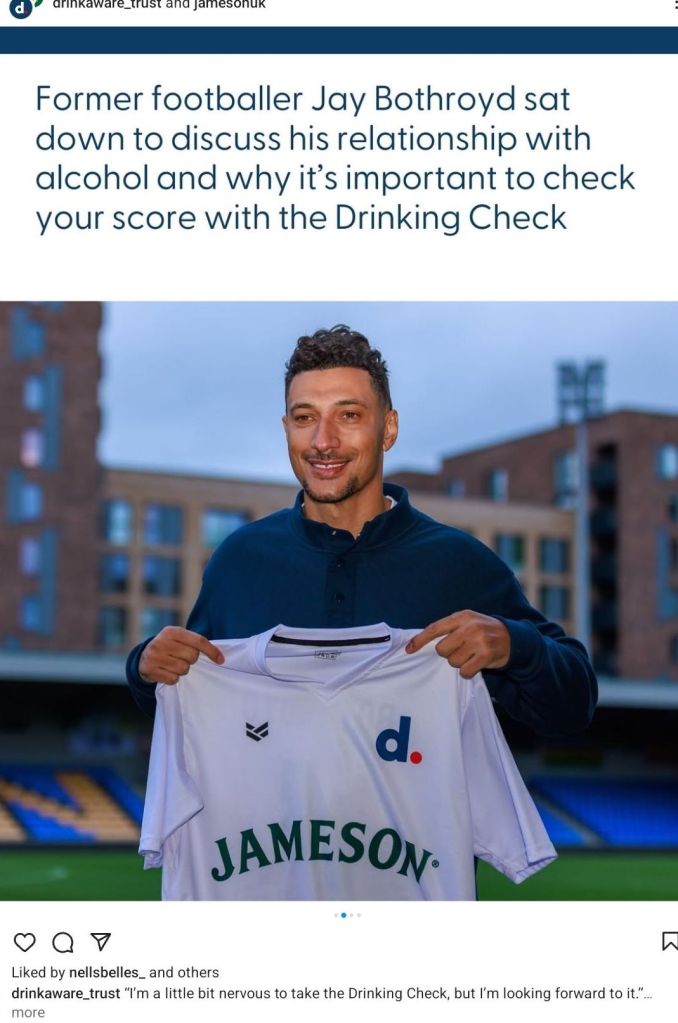
  • Jameson, official partner of the English Football League (EFL), has teamed up with leading alcohol harm charity Drinkaware and former England international and football legend Jay Bothroyd to encourage football fans to keep score and check their drinking habits 
  • Bothroyd urges football fans to visit Drinkaware’s website and take a quick, free, online Drinking Check
  • The partnership and campaign support Jameson’s commitment to promoting responsible drinking within football communities across the UK
  • Campaign video: HERE | Interview video: HERE

In a busy start to the January transfer window, Jameson has teamed up with Drinkaware, the leading alcohol harm charity, and former England international and football legend Jay Bothroyd, to continue its commitment to promoting responsible drinking within British football culture.

Football fans are encouraged to kick off the new year by checking whether their drinking habits are putting their health at risk. Jameson’s new signing, Bothroyd, urges fans to visit Drinkaware’s website and use the free Drinking Check tool to assess their habits.

The Drinking Check is a quick, three-minute online quiz that provides a personalised drinking score. It helps users understand the potential impact of their drinking habits on their health and offers tailored advice and support for those who may need help moderating their consumption.

What Is Alcohol?

moet us 2 botts fb 7616

The scientific name for alcohol that people drink is ethyl alcohol or ethanol. Beer, wine, and liquor all contain ethyl alcohol. Other types of alcohol, like rubbing alcohol (isopropyl alcohol), are poisonous if consumed.

What Happens When You Drink Alcohol?

After you drink an alcoholic beverage like beer or wine, the alcohol enters your bloodstream from your stomach and small intestine. From there, it travels to your brain. There, it slows reaction time, makes you less coordinated, impairs your vision, and — even at relatively low doses — leads to unclear thinking and problems making good judgments.

Is Alcohol Addictive?

Yes, alcohol is highly addictive. About 18 million adults are addicted to alcohol. This means they need to drink alcohol in order to function normally, and their drinking causes problems in their lives.

Alcohol addiction can begin at any time in someone’s life. But starting to drink when you are a teenager increases the risk for addiction. Teens who start drinking alcohol before age 15 are five times likelier to develop a later addiction to alcohol than those who begin drinking at age 21 or older.

Is One Type of Alcoholic Drink Safer than Another?

No. All alcoholic drinks contain alcohol, and all can be just as dangerous. The more alcohol you drink, the more you will be impaired. Beer, wine, and liquor all contain different amounts of alcohol. Beer is between 3% and 5% alcohol; wine is about 12%; and liquor usually is about 40% alcohol. One beer has about the same amount of alcohol as one glass of wine or one “shot” of liquor.

Why Do People Drink Alcohol?

Drinking alcohol is a social activity — most people drink with friends. Because alcohol makes people feel less inhibited, they feel more at ease socializing when they drink. People also drink just because other people are drinking. For many people, it feels good to be doing what everybody else is doing. But drinking just because everybody else is drinking can lead to problems, especially if people are drinking too much.

On the other hand, many people enjoy the taste of alcoholic beverages. And when consumed by adults in small to moderate amounts, especially with meals, alcohol may be good for the heart.

http://teens.webmd.com/teens-and-alcohol#1

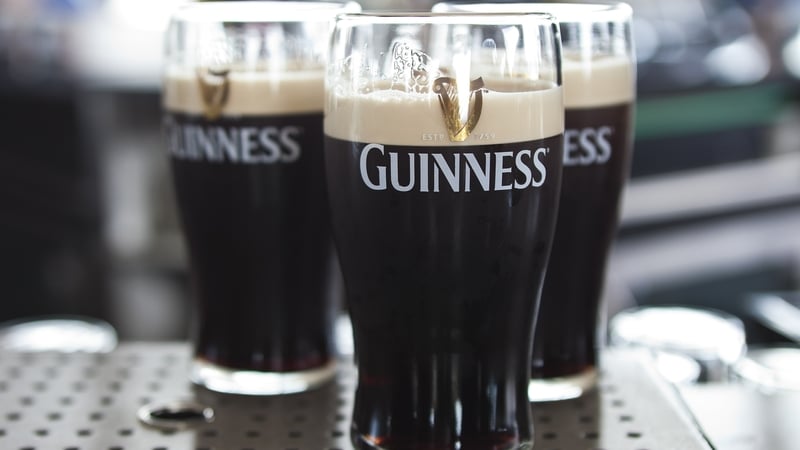
Diageo exploring potential spin-off or sale of Guinness – Bloomberg. https://www.rte.ie/news/business/

Updated / Friday, 24 Jan 2025 17:58

Guinness would likely be valued at above $10 billion, according to a Bloomberg report today

Diageo, the world’s top spirits maker, is exploring a potential spin-off or sale of beer brand Guinness and is reviewing its stake in LVMH’s drinks unit, Moet Hennessy, Bloomberg News reported today, citing people familiar with the matter.

News about a potential sale of the beer label, a star performer in Diageo’s portfolio, helped lift Diageo’s shares almost 4% higher, becoming the top percentage gainer on the blue-chip index. However, some analysts and one source familiar with the situation said a Guinness sale right now did not make sense.

Diageo declined to comment on market speculation; LVMH declined to comment.

Guinness is an outlier in Diageo’s business, which consists mostly of spirits rather than beer, but its performance recently has outshone that of key liquor labels like Johnnie Walker whisky.

Spirits sales have struggled as a post-pandemic boom in demand for pricey bottles of liquor went into reverse. Meanwhile, Guinness sales have grown by double digits every year since 2021, with its zero-alcohol version also surging.

Its recent success could make Guinness an attractive asset. It would likely be valued at above $10 billion, Bloomberg reported, citing the sources.

Diageo’s liquor brands also offer a higher margin and generally, drinkers in developed markets are shifting away from beer and towards spirits-based drinks like cocktails.

But at the same time, Guinness’ success also left analysts like Laurence Whyatt at Barclays wondering why Diageo would want to sell it.

“I would be very surprised if Diageo wanted to sell Guinness,” he said, adding it was unusual for companies to want to sell their best-performing assets.

A source familiar with the situation agreed that it makes no sense for Diageo to sell Guinness in the near term given its performance, adding Diageo does not need the money and CEO Debra Crew had said publicly how much she likes the label.

Bloomberg also reported that Diageo could look to deepen its ownership in the Moet Hennessy venture, or exit altogether.

In a note earlier on Friday, Bernstein analyst Trevor Stirling said Diageo taking full control of the LVMH wine and spirits division would likely necessitate “a very reluctant disposal of beer/Guinness”.

More stories on

Diageo exploring potential spin-off or sale of Guinness – Bloomberg. https://www.rte.ie/news/business/

Updated / Friday, 24 Jan 2025 17:58

Guinness would likely be valued at above $10 billion, according to a Bloomberg report today

Diageo, the world’s top spirits maker, is exploring a potential spin-off or sale of beer brand Guinness and is reviewing its stake in LVMH’s drinks unit, Moet Hennessy, Bloomberg News reported today, citing people familiar with the matter.

News about a potential sale of the beer label, a star performer in Diageo’s portfolio, helped lift Diageo’s shares almost 4% higher, becoming the top percentage gainer on the blue-chip index. However, some analysts and one source familiar with the situation said a Guinness sale right now did not make sense.

Diageo declined to comment on market speculation; LVMH declined to comment.

Guinness is an outlier in Diageo’s business, which consists mostly of spirits rather than beer, but its performance recently has outshone that of key liquor labels like Johnnie Walker whisky.

Spirits sales have struggled as a post-pandemic boom in demand for pricey bottles of liquor went into reverse. Meanwhile, Guinness sales have grown by double digits every year since 2021, with its zero-alcohol version also surging.

Its recent success could make Guinness an attractive asset. It would likely be valued at above $10 billion, Bloomberg reported, citing the sources.

Diageo’s liquor brands also offer a higher margin and generally, drinkers in developed markets are shifting away from beer and towards spirits-based drinks like cocktails.

But at the same time, Guinness’ success also left analysts like Laurence Whyatt at Barclays wondering why Diageo would want to sell it.

“I would be very surprised if Diageo wanted to sell Guinness,” he said, adding it was unusual for companies to want to sell their best-performing assets.

A source familiar with the situation agreed that it makes no sense for Diageo to sell Guinness in the near term given its performance, adding Diageo does not need the money and CEO Debra Crew had said publicly how much she likes the label.

Bloomberg also reported that Diageo could look to deepen its ownership in the Moet Hennessy venture, or exit altogether.

In a note earlier on Friday, Bernstein analyst Trevor Stirling said Diageo taking full control of the LVMH wine and spirits division would likely necessitate “a very reluctant disposal of beer/Guinness”.

More stories on

Drinkaware, funded by the drinks companies, teams up with Jameson to encourage fans to check their drinking #alcoholad #pernodricard

 new digital campaign will go live from today across 72 EFL club websites and social media, as part of Jameson’s official long-term partnership with the organisation, as well as Jameson, Drinkaware, and Jay Bothroyd’s social media channels

  • Jameson, official partner of the English Football League (EFL), has teamed up with leading alcohol harm charity Drinkaware and former England international and football legend Jay Bothroyd to encourage football fans to keep score and check their drinking habits 
  • Bothroyd urges football fans to visit Drinkaware’s website and take a quick, free, online Drinking Check
  • The partnership and campaign support Jameson’s commitment to promoting responsible drinking within football communities across the UK
  • Campaign video: HERE | Interview video: HERE

In a busy start to the January transfer window, Jameson has teamed up with Drinkaware, the leading alcohol harm charity, and former England international and football legend Jay Bothroyd, to continue its commitment to promoting responsible drinking within British football culture.

Football fans are encouraged to kick off the new year by checking whether their drinking habits are putting their health at risk. Jameson’s new signing, Bothroyd, urges fans to visit Drinkaware’s website and use the free Drinking Check tool to assess their habits.

The Drinking Check is a quick, three-minute online quiz that provides a personalised drinking score. It helps users understand the potential impact of their drinking habits on their health and offers tailored advice and support for those who may need help moderating their consumption.

Drinkaware, funded by the drinks companies, teams up with Jameson to encourage fans to check their drinking #alcoholad #pernodricard

 new digital campaign will go live from today across 72 EFL club websites and social media, as part of Jameson’s official long-term partnership with the organisation, as well as Jameson, Drinkaware, and Jay Bothroyd’s social media channels

  • Jameson, official partner of the English Football League (EFL), has teamed up with leading alcohol harm charity Drinkaware and former England international and football legend Jay Bothroyd to encourage football fans to keep score and check their drinking habits 
  • Bothroyd urges football fans to visit Drinkaware’s website and take a quick, free, online Drinking Check
  • The partnership and campaign support Jameson’s commitment to promoting responsible drinking within football communities across the UK
  • Campaign video: HERE | Interview video: HERE

In a busy start to the January transfer window, Jameson has teamed up with Drinkaware, the leading alcohol harm charity, and former England international and football legend Jay Bothroyd, to continue its commitment to promoting responsible drinking within British football culture.

Football fans are encouraged to kick off the new year by checking whether their drinking habits are putting their health at risk. Jameson’s new signing, Bothroyd, urges fans to visit Drinkaware’s website and use the free Drinking Check tool to assess their habits.

The Drinking Check is a quick, three-minute online quiz that provides a personalised drinking score. It helps users understand the potential impact of their drinking habits on their health and offers tailored advice and support for those who may need help moderating their consumption.

Scientists have found alcohol can increase the risk of cancer by snapping DNA @spiritsbusiness

27m27 minutes ago

Scientists have found alcohol can increase the risk of cancer by snapping DNA

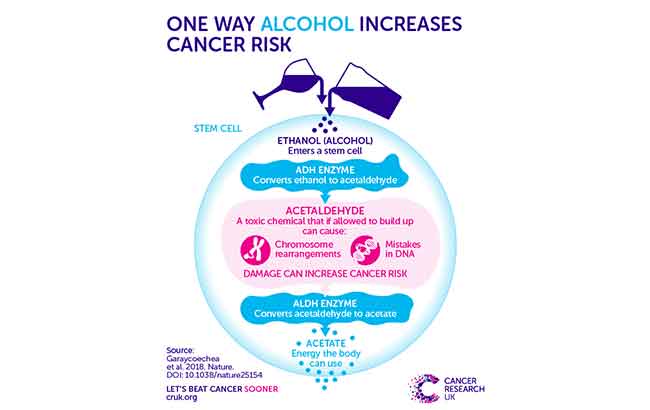
A new study by the Medical Research Council Laboratory of Molecular Biology at Cambridge University in the UK, commissioned by Cancer Research UK, discovered that when the body processes alcohol it producers a chemical called acetaldehyde, which is harmful to DNA.

The researchers found that acetaldehyde snaps the DNA of stem cells – a type of cell that supplies the many different specialised cells our bodies are made of – which can eventually lead to cell mutations.

To analyse the effect acetaldehyde might cause to stem cells’ DNA, the scientists looked at mice cells that didn’t have acetaldehyde dehydrogenases (ALDH) enzymes, which stop acetaldehyde building up by converting it to acetate, which cells use as a source of energy.

They gave the mice diluted ethanol, the purest form of alcohol, and used techniques to see the DNA inside the cells and read its code.

Professor Ketan Patel, who lead the team of researchers, said: “We saw huge amounts of DNA damage in these cells. Bits of DNA were deleted, bits were broken and we even saw parts of chromosomes being moved about and rearranged.

“Our work definitely shows that external factors, like drinking alcohol, can damage DNA in blood stem cells, meaning it could also damage DNA in other types of stem cells.

“While we didn’t look at whether these mice got cancer or not, previous studies have shown that the type of DNA damage we saw in these mice can considerably increase the risk of cancer.”

As a result, Cancer Research UK urged consumers to reduce their alcohol intake. Cancer is linked to seven types of cancer: liver, breast, bowel, upper throat, mouth, oesophageal and larynx.