Diageo cuts annual sales forecast and dividend as US demand falters: https://www.rte.ie/news/business/

Updated / Wednesday, 25 Feb 2026 07:48

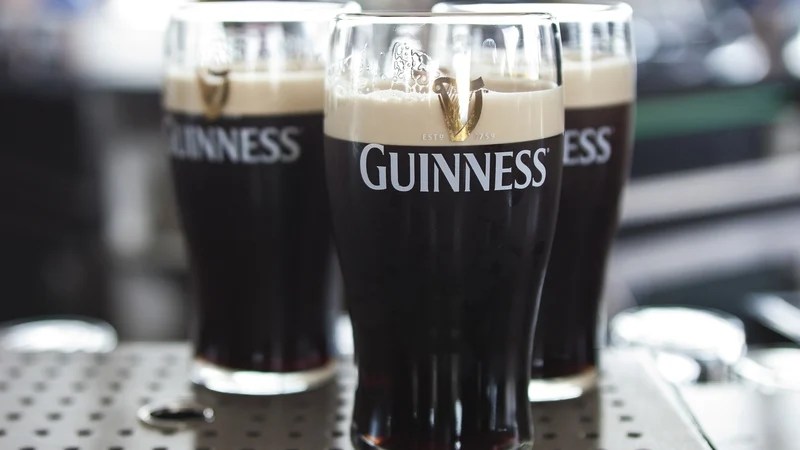
Guinness maker Diageo has cut its annual sales and profit forecast for the second time in four months and slashed its dividend, as its first results under new boss Dave Lewis showed weak US and Chinese demand still weighing on the world’s biggest spirits maker.

“US spirits performance reflected pressure on disposable income, and competitive pressure from more affordable alternatives addressing a more stretched consumer wallet,” Lewis said in Diageo’s half-year results statement.

Lewis, who took over the Johnnie Walker whisky and Guinness maker in January, faces the challenge of reducing debt and reviving growth amid tariff-related uncertainty in the US, slowing demand in China, fragile global consumer sentiment, and evolving drinking preferences among some consumers.

His appointment followed the abrupt resignation of Debra Crew, under whom Diageo suffered a profit warning in Latin America, a significant slowdown in global growth and growing unease among investors who demand both debt reduction and a credible plan to reignite sales at the struggling drinks giant.

Diageo said it now expects 2026 organic sales to fall 2%-3% and organic operating profit to be flat to up low-single-digits. It had earlier forecast flat to slightly lower sales and low to mid-single-digit profit growth.

The company’s US sales declined 9.3%, with sales of tequilas such as Don Julio, which has been an important driver of growth, slipping more than 23%.

It declared an interim dividend of 20 cents per share, down from 40.5 cents a year ago, and set a minimum floor for dividend of 50 cents per annum.

More stories on

Diageo exploring potential spin-off or sale of Guinness – Bloomberg. https://www.rte.ie/news/business/

Updated / Friday, 24 Jan 2025 17:58

Guinness would likely be valued at above $10 billion, according to a Bloomberg report today

Diageo, the world’s top spirits maker, is exploring a potential spin-off or sale of beer brand Guinness and is reviewing its stake in LVMH’s drinks unit, Moet Hennessy, Bloomberg News reported today, citing people familiar with the matter.

News about a potential sale of the beer label, a star performer in Diageo’s portfolio, helped lift Diageo’s shares almost 4% higher, becoming the top percentage gainer on the blue-chip index. However, some analysts and one source familiar with the situation said a Guinness sale right now did not make sense.

Diageo declined to comment on market speculation; LVMH declined to comment.

Guinness is an outlier in Diageo’s business, which consists mostly of spirits rather than beer, but its performance recently has outshone that of key liquor labels like Johnnie Walker whisky.

Spirits sales have struggled as a post-pandemic boom in demand for pricey bottles of liquor went into reverse. Meanwhile, Guinness sales have grown by double digits every year since 2021, with its zero-alcohol version also surging.

Its recent success could make Guinness an attractive asset. It would likely be valued at above $10 billion, Bloomberg reported, citing the sources.

Diageo’s liquor brands also offer a higher margin and generally, drinkers in developed markets are shifting away from beer and towards spirits-based drinks like cocktails.

But at the same time, Guinness’ success also left analysts like Laurence Whyatt at Barclays wondering why Diageo would want to sell it.

“I would be very surprised if Diageo wanted to sell Guinness,” he said, adding it was unusual for companies to want to sell their best-performing assets.

A source familiar with the situation agreed that it makes no sense for Diageo to sell Guinness in the near term given its performance, adding Diageo does not need the money and CEO Debra Crew had said publicly how much she likes the label.

Bloomberg also reported that Diageo could look to deepen its ownership in the Moet Hennessy venture, or exit altogether.

In a note earlier on Friday, Bernstein analyst Trevor Stirling said Diageo taking full control of the LVMH wine and spirits division would likely necessitate “a very reluctant disposal of beer/Guinness”.

More stories on

Diageo exploring potential spin-off or sale of Guinness – Bloomberg. https://www.rte.ie/news/business/

Updated / Friday, 24 Jan 2025 17:58

Guinness would likely be valued at above $10 billion, according to a Bloomberg report today

Diageo, the world’s top spirits maker, is exploring a potential spin-off or sale of beer brand Guinness and is reviewing its stake in LVMH’s drinks unit, Moet Hennessy, Bloomberg News reported today, citing people familiar with the matter.

News about a potential sale of the beer label, a star performer in Diageo’s portfolio, helped lift Diageo’s shares almost 4% higher, becoming the top percentage gainer on the blue-chip index. However, some analysts and one source familiar with the situation said a Guinness sale right now did not make sense.

Diageo declined to comment on market speculation; LVMH declined to comment.

Guinness is an outlier in Diageo’s business, which consists mostly of spirits rather than beer, but its performance recently has outshone that of key liquor labels like Johnnie Walker whisky.

Spirits sales have struggled as a post-pandemic boom in demand for pricey bottles of liquor went into reverse. Meanwhile, Guinness sales have grown by double digits every year since 2021, with its zero-alcohol version also surging.

Its recent success could make Guinness an attractive asset. It would likely be valued at above $10 billion, Bloomberg reported, citing the sources.

Diageo’s liquor brands also offer a higher margin and generally, drinkers in developed markets are shifting away from beer and towards spirits-based drinks like cocktails.

But at the same time, Guinness’ success also left analysts like Laurence Whyatt at Barclays wondering why Diageo would want to sell it.

“I would be very surprised if Diageo wanted to sell Guinness,” he said, adding it was unusual for companies to want to sell their best-performing assets.

A source familiar with the situation agreed that it makes no sense for Diageo to sell Guinness in the near term given its performance, adding Diageo does not need the money and CEO Debra Crew had said publicly how much she likes the label.

Bloomberg also reported that Diageo could look to deepen its ownership in the Moet Hennessy venture, or exit altogether.

In a note earlier on Friday, Bernstein analyst Trevor Stirling said Diageo taking full control of the LVMH wine and spirits division would likely necessitate “a very reluctant disposal of beer/Guinness”.

More stories on

No safe limit to alcohol consumption, say researchers

Going teetotal is the only way to avoid risking health with alcohol, scientists have claimed.A major global study has concluded there is no safe limit to alcohol consumption.Previous research suggested that moderate levels of alcohol – around one drink a day for women and two for men – may protect against heart disease.

However the authors of the new study insist that any benefits from drinking alcohol are outweighed by the harms.

They estimate that consuming just one drink per day increases the risk of developing one of 23 alcohol-related health problems by 0.5%, compared with not drinking at all.

US lead researcher Dr Max Griswold, from the Institute for Health Metrics and Evaluation at the University of Washington, said: “Previous studies have found a protective effect of alcohol on some conditions, but we found that the combined health risks associated with alcohol increase with any amount of alcohol.

“In particular, the strong association between alcohol consumption and the risk of cancer, injuries, and infectious diseases offset the protective effects for ischaemic heart disease in women in our study.

“Although the health risks associated with alcohol start off being small with one drink a day, they then rise rapidly as people drink more.”

The scientists pooled together data from 592 studies with a total of 28 million participants to assess the global health risks associated with alcohol.

A standard alcohol drink was defined as one containing 10 grams of alcohol.

The team used a new statistical method to estimate the risks of consuming between zero and 15 standard alcohol drinks each day.

Globally, around one in three people – or 2.4 billion – drink alcohol, said the researchers, whose findings are reported in The Lancet medical journal.

Each year, 2.2% of women and 6.8% of men die from alcohol-related health problems including cancer, tuberculosis and liver disease.

Other harmful consequences from drinking alcohol included accidents and violence.

Worldwide, drinking alcohol was the seventh leading risk factor for overall premature death and disease in 2016, the study found.

However among people aged 15-to-49 it was the most important risk factor, accounting for 3.8% of women’s and 12.2% of men’s deaths.

For people over the age of 50, cancers were the leading cause of alcohol-related deaths. They were responsible for 27.1% of alcohol-related deaths of women and 18.9% of men.

The 0.5% increase in risk meant that 918 people per 100,000 who consumed one alcoholic drink a day would develop a health problem compared with 914 who did not drink.

The relative increase in risk rose to 7% for people who consumed two drinks a day and soared to 37% for those who downed five drinks.

Any protection against heart disease, stroke and diabetes offered by alcohol turned out to be “not statistically significant”, said the researchers.

Drinking patterns varied greatly around the world, the study found.

Denmark had the highest proportion of alcohol consumers, 95.3% of women and 97.3% of men, and Pakistan and Bangladesh the lowest. Just 0.8% of Pakistani men and 0.3% of Bangladeshi women drank alcohol.

Men in Romania and women in Ukraine drank the most – 8.2 and 4.2 drinks per day respectively.

Professor Emmanuela Gakidou, from the Institute for Health Metrics and Evaluation at the University of Washington, said: “Worldwide we need to revisit alcohol control policies and health programmes, and to consider recommendations for abstaining from alcohol.”

https://www.rte.ie/news/2018/0824/987158-no-safe-alcohol-consumption/
 

No safe limit to alcohol consumption, say researchers

Going teetotal is the only way to avoid risking health with alcohol, scientists have claimed.A major global study has concluded there is no safe limit to alcohol consumption.

Previous research suggested that moderate levels of alcohol – around one drink a day for women and two for men – may protect against heart disease.

However the authors of the new study insist that any benefits from drinking alcohol are outweighed by the harms.

They estimate that consuming just one drink per day increases the risk of developing one of 23 alcohol-related health problems by 0.5%, compared with not drinking at all.

US lead researcher Dr Max Griswold, from the Institute for Health Metrics and Evaluation at the University of Washington, said: “Previous studies have found a protective effect of alcohol on some conditions, but we found that the combined health risks associated with alcohol increase with any amount of alcohol.

“In particular, the strong association between alcohol consumption and the risk of cancer, injuries, and infectious diseases offset the protective effects for ischaemic heart disease in women in our study.

“Although the health risks associated with alcohol start off being small with one drink a day, they then rise rapidly as people drink more.”

The scientists pooled together data from 592 studies with a total of 28 million participants to assess the global health risks associated with alcohol.

A standard alcohol drink was defined as one containing 10 grams of alcohol.

The team used a new statistical method to estimate the risks of consuming between zero and 15 standard alcohol drinks each day.

Globally, around one in three people – or 2.4 billion – drink alcohol, said the researchers, whose findings are reported in The Lancet medical journal.

Each year, 2.2% of women and 6.8% of men die from alcohol-related health problems including cancer, tuberculosis and liver disease.

Other harmful consequences from drinking alcohol included accidents and violence.

Worldwide, drinking alcohol was the seventh leading risk factor for overall premature death and disease in 2016, the study found.

However among people aged 15-to-49 it was the most important risk factor, accounting for 3.8% of women’s and 12.2% of men’s deaths.

For people over the age of 50, cancers were the leading cause of alcohol-related deaths. They were responsible for 27.1% of alcohol-related deaths of women and 18.9% of men.

The 0.5% increase in risk meant that 918 people per 100,000 who consumed one alcoholic drink a day would develop a health problem compared with 914 who did not drink.

The relative increase in risk rose to 7% for people who consumed two drinks a day and soared to 37% for those who downed five drinks.

Any protection against heart disease, stroke and diabetes offered by alcohol turned out to be “not statistically significant”, said the researchers.

Drinking patterns varied greatly around the world, the study found.

Denmark had the highest proportion of alcohol consumers, 95.3% of women and 97.3% of men, and Pakistan and Bangladesh the lowest. Just 0.8% of Pakistani men and 0.3% of Bangladeshi women drank alcohol.

Men in Romania and women in Ukraine drank the most – 8.2 and 4.2 drinks per day respectively.

Professor Emmanuela Gakidou, from the Institute for Health Metrics and Evaluation at the University of Washington, said: “Worldwide we need to revisit alcohol control policies and health programmes, and to consider recommendations for abstaining from alcohol.”

https://www.rte.ie/news/2018/0824/987158-no-safe-alcohol-consumption/